
Maintain the digital properties supporting your business presence.
Organise business websites, domains, hosting providers and subscription commitments without replacing property or tenant-management tools.
7 days free · No card required · Your own workspaceKnow what your team depends on
Start with an inventory of the services and operational assets relevant to your work.
Make responsibility clear
Record who can verify information, approve a decision and complete the next action.
Review before the deadline
Connect upcoming renewals and commitments to a visible review workflow.
Keep the handover usable
Maintain the context behind a record so another teammate can continue without rebuilding it.
Your next practical step.
Explore the connected workflow most relevant to your team.
Explore the workflow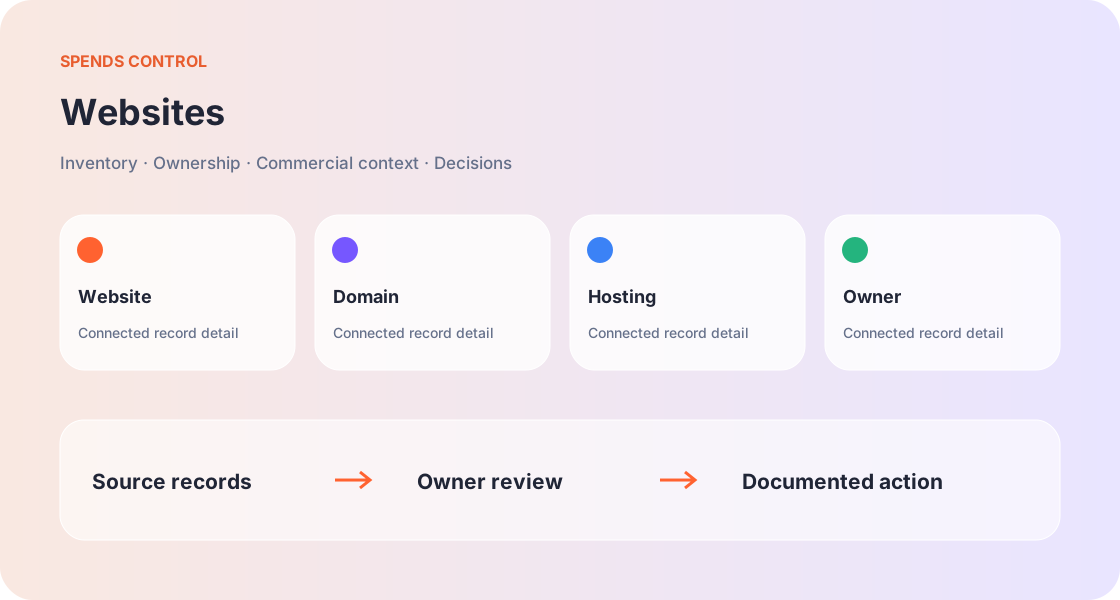
Begin with the operating question
The purpose of real estate businesses is to help you organise business websites, domains, hosting providers and subscription commitments without replacing property or tenant-management tools. Start by describing the decision you need to make rather than entering records without a review purpose. A useful example is a business transferring its website account and domain renewal responsibility. That scenario gives the team a concrete reason to collect accurate information.
Collect the information that changes the decision
Focus on website platforms, domain ownership, hosting costs and supplier handovers. These details give a reviewer enough context to verify the record and ask a specific next question. Unknown values should remain visible as information gaps. Guessing a number, date or relationship can make a subsequent cost or ownership review look more certain than it is.
Make the responsible roles explicit
For real estate businesses, the person supplying information may be different from the person approving a change. The operating scenario involving a business transferring its website account and domain renewal responsibility shows why those roles matter. Name the operating owner, identify the decision authority and grant access according to the actual work instead of assuming every teammate needs full workspace access.
Connect the source records
Use related inventory, supplier, transaction and lifecycle information when it supports the aim to organise business websites, domains, hosting providers and subscription commitments without replacing property or tenant-management tools. A relationship should describe what the team has verified. Similar names, old notes or a blank field are not proof that services are connected or unnecessary. Keep the current record close to its commercial context.
Separate estimates from outcomes
A review of website platforms, domain ownership, hosting costs and supplier handovers can include estimates, expectations and actual recorded outcomes. Keep those stages distinguishable. For example, a business transferring its website account and domain renewal responsibility still needs verification before a proposal becomes an authorised change. A target cost reduction, future commitment or intended handover should not be reported as something that has already happened.
Real estate businesses questions
Which operating decisions can real estate businesses review?
The purpose of real estate businesses is to help you organise business websites, domains, hosting providers and subscription commitments without replacing property or tenant-management tools. Start by describing the decision you need to make rather than entering records without a review purpose. A useful example is a business transferring its website account and domain renewal responsibility. That scenario gives the team a concrete reason to collect accurate information. Write down the decision and the person responsible for it.
Which information should real estate businesses collect for a review?
Focus on website platforms, domain ownership, hosting costs and supplier handovers. These details give a reviewer enough context to verify the record and ask a specific next question. Unknown values should remain visible as information gaps. Guessing a number, date or relationship can make a subsequent cost or ownership review look more certain than it is. Confirm important details from the underlying source.
How should real estate businesses separate operating ownership from approval?
For real estate businesses, the person supplying information may be different from the person approving a change. The operating scenario involving a business transferring its website account and domain renewal responsibility shows why those roles matter. Name the operating owner, identify the decision authority and grant access according to the actual work instead of assuming every teammate needs full workspace access. Assign the next action to someone able to complete it.
Which source records should real estate businesses keep connected?
Use related inventory, supplier, transaction and lifecycle information when it supports the aim to organise business websites, domains, hosting providers and subscription commitments without replacing property or tenant-management tools. A relationship should describe what the team has verified. Similar names, old notes or a blank field are not proof that services are connected or unnecessary. Keep the current record close to its commercial context. Open the relevant source record before accepting a conclusion.
How should real estate businesses distinguish estimated and confirmed costs?
A review of website platforms, domain ownership, hosting costs and supplier handovers can include estimates, expectations and actual recorded outcomes. Keep those stages distinguishable. For example, a business transferring its website account and domain renewal responsibility still needs verification before a proposal becomes an authorised change. A target cost reduction, future commitment or intended handover should not be reported as something that has already happened. Record which values are proposed and which are confirmed.
Bring your digital assets into focus.
Start with seven days to organise the services, costs and responsibilities your team depends on.
No card required. Your trial expiry stays visible in your profile.