
Separate a possible reduction from an agreed commitment and a verified financial outcome.
Keep the source record, responsible people and next operating decision connected in your own workspace.
7 days free · No card required · Your own workspace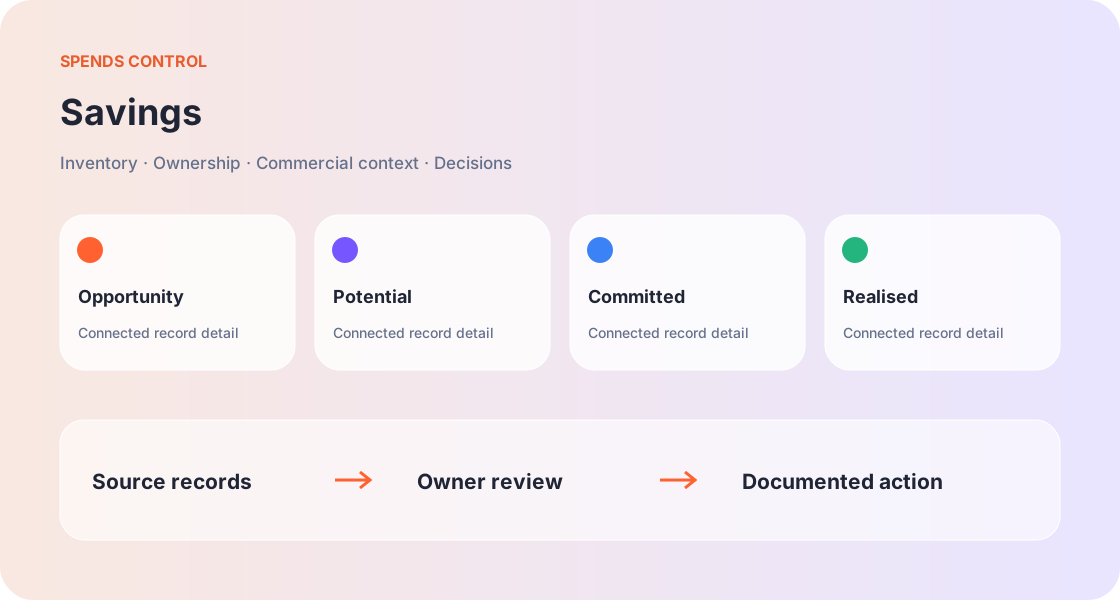
Potential savings are a hypothesis
An opportunity estimates what might be saved if a review leads to an eligible change. The amount depends on source data, contract terms and implementation. Keep the estimate visible as potential rather than including it in money already recovered.
Committed savings need agreement
A negotiated reduction becomes committed only when the relevant terms have been agreed. Record the owner and evidence explaining the commitment. The effective date may be later than the agreement date, especially for annual contracts.
Realised savings need an outcome
Confirm the change has happened before recording realised savings. A cancelled seat, revised invoice or retired service should have evidence and a consistent comparison basis. Avoid counting an accepted proposal and the resulting transaction as separate savings.
Cost avoidance is a different measure
Avoiding a future planned charge is not the same as reducing an existing paid commitment. Keep avoided costs separate and record the scenario that would otherwise have occurred. This lets reviewers understand the basis of the claimed benefit.
Ownership until the action is complete
Assign an owner to negotiations, cancellations and implementation. An opportunity without a next action can remain a promising number indefinitely. Keep progress and evidence updated so the next review starts from the latest decision.
Begin with the operating question
The purpose of savings is to help you separate a possible reduction from an agreed commitment and a verified financial outcome. Start by describing the decision you need to make rather than entering records without a review purpose. A useful example is a review of opportunity, potential, committed, realised for an asset with a named owner. That scenario gives the team a concrete reason to collect accurate information.
Collect the information that changes the decision
Focus on Opportunity, Potential, Committed, Realised. These details give a reviewer enough context to verify the record and ask a specific next question. Unknown values should remain visible as information gaps. Guessing a number, date or relationship can make a subsequent cost or ownership review look more certain than it is.
Make the responsible roles explicit
For savings, the person supplying information may be different from the person approving a change. The operating scenario involving a review of opportunity, potential, committed, realised for an asset with a named owner shows why those roles matter. Name the operating owner, identify the decision authority and grant access according to the actual work instead of assuming every teammate needs full workspace access.
Connect the source records
Use related inventory, supplier, transaction and lifecycle information when it supports the aim to separate a possible reduction from an agreed commitment and a verified financial outcome. A relationship should describe what the team has verified. Similar names, old notes or a blank field are not proof that services are connected or unnecessary. Keep the current record close to its commercial context.
Separate estimates from outcomes
A review of Opportunity, Potential, Committed, Realised can include estimates, expectations and actual recorded outcomes. Keep those stages distinguishable. For example, a review of opportunity, potential, committed, realised for an asset with a named owner still needs verification before a proposal becomes an authorised change. A target cost reduction, future commitment or intended handover should not be reported as something that has already happened.
Savings questions
What does a potential saving represent?
An opportunity estimates what might be saved if a review leads to an eligible change. The amount depends on source data, contract terms and implementation. Keep the estimate visible as potential rather than including it in money already recovered. Check the calculation and commercial assumptions.
When can a saving be described as committed?
A negotiated reduction becomes committed only when the relevant terms have been agreed. Record the owner and evidence explaining the commitment. The effective date may be later than the agreement date, especially for annual contracts. Verify the accepted terms and effective date.
What evidence confirms that a saving has happened?
Confirm the change has happened before recording realised savings. A cancelled seat, revised invoice or retired service should have evidence and a consistent comparison basis. Avoid counting an accepted proposal and the resulting transaction as separate savings. Record the verified result once.
How does cost avoidance differ from realised savings?
Avoiding a future planned charge is not the same as reducing an existing paid commitment. Keep avoided costs separate and record the scenario that would otherwise have occurred. This lets reviewers understand the basis of the claimed benefit. Describe the avoided commitment explicitly.
Who owns a saving until the agreed action is complete?
Assign an owner to negotiations, cancellations and implementation. An opportunity without a next action can remain a promising number indefinitely. Keep progress and evidence updated so the next review starts from the latest decision. Update status when the action genuinely changes.
Bring your digital assets into focus.
Start with seven days to organise the services, costs and responsibilities your team depends on.
No card required. Your trial expiry stays visible in your profile.